Kathmandu- CPN-UML Chairman KP Sharma Oli has reiterated his dissatisfaction with the commission formed to investigate the Gen Z movement, telling Prime Minister Sushila Karki that he would not appear at the commission’s office in Singha Durbar to record his statement.
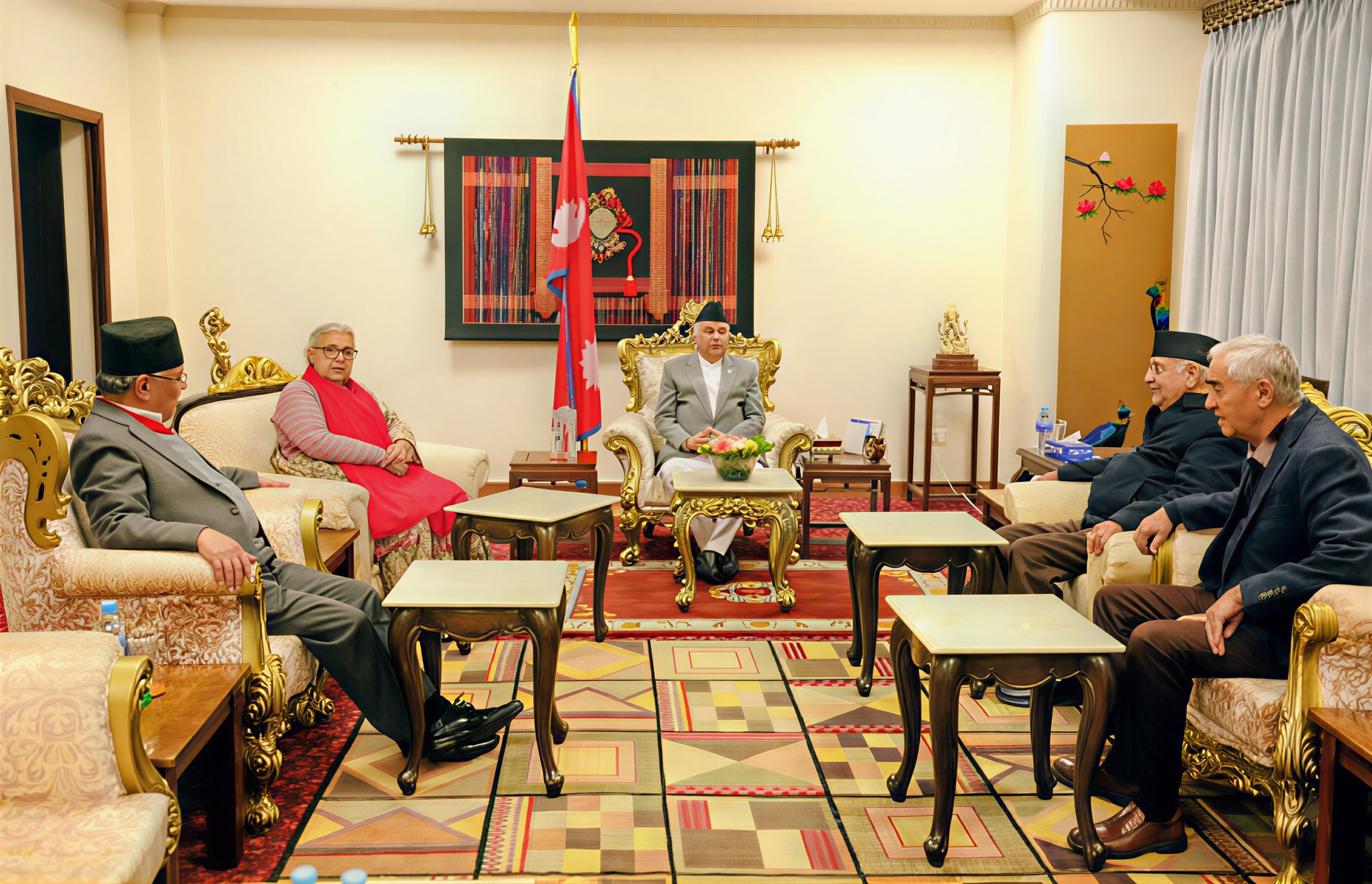
According to sources familiar with the discussion, Oli raised the issue during a high-level meeting held at Sheetal Niwas on Tuesday, chaired by President Ramchandra Poudel. The meeting was attended by Prime Minister Karki, Nepali Congress President Sher Bahadur Deuba, UML Chairman Oli, and Nepal Communist Party coordinator Pushpa Kamal Dahal ‘Prachanda’.
The meeting was convened amid growing political pressure on the government to create a conducive environment for elections, with major parties accusing the Prime Minister of failing to consult top leadership.
Two parallel positions at Sheetal Niwas
Sources at the President’s Office said the discussions at Sheetal Niwas revealed two distinct political lines—UML Chair Oli and Congress President Deuba pressing for the restoration of parliament, while the President, Prime Minister Karki, and NCP coordinator Prachanda emphasized moving ahead with elections.
During the discussion, Oli again questioned the legitimacy and mandate of the Gauri Bahadur Karki-led Commission of Inquiry, particularly objecting to its intention to summon him for a statement.
“This is not the commission’s job. Why was it formed in the first place?” Oli was quoted as saying. “If it wants my statement, send its people to my home in Gundu. I will speak there.”
Oli repeated his long-held position that he would not go to the commission’s office, a stance he has expressed earlier in public interviews as well, including on Himalayan Television.
Background: commission under criticism
Since its formation, Oli has consistently criticized the commission’s justification and working style, both in public forums and closed-door meetings. He has argued that the political context does not support the commission’s functioning, claiming the election environment has not been created.
Meanwhile, the government has intensified outreach efforts. On Tuesday, a dialogue team comprising Ministers Anil Sinha and Jagdish Kharel visited the headquarters of Nepali Congress in Sanepa, UML in Chyasal, and NCP in Parisdanda to ease tensions.
Commission prepares to summon Oli
The Commission of Inquiry has begun formal procedures to record statements from key figures. On Tuesday, it sent a letter to Home Minister Ramesh Lekhak, who served in Oli’s cabinet. The minister has said he has not yet received the letter.
Commission spokesperson Vigyanraj Sharma said Oli would be called for a statement after the Home Minister’s testimony. However, Oli has publicly maintained that he will not appear before a commission formed by the current executive and endorsed by the President.
What options does the commission have?
If Oli refuses to appear at Singha Durbar, the commission is left with three possible courses of action:
- Recording the statement at Oli’s residence
Commission members acknowledge that visiting a person’s residence to record a statement is legally permissible and has precedent. A commission member told Nepal Khabar that, considering Oli’s health and security, this option remains open, though no formal decision has been taken. - Proceeding under contempt provisions
Under Section 6 of the Commission of Inquiry Act, 2026 (amended 2075), the commission can initiate contempt proceedings and impose a fine of up to Rs. 500 for non-cooperation. The commission could close the matter after imposing the fine, though this would limit the scope of inquiry. - Using coercive legal authority
Section 4(3) of the Act grants the commission powers equivalent to a court, including summoning individuals and seeking government assistance to enforce attendance. Former Home Minister Om Prakash Aryal had earlier said that police assistance could be used if necessary, though sources say this remains the least preferred option.
Officials indicate that the commission is more likely to pursue the first or second option rather than taking coercive measures.