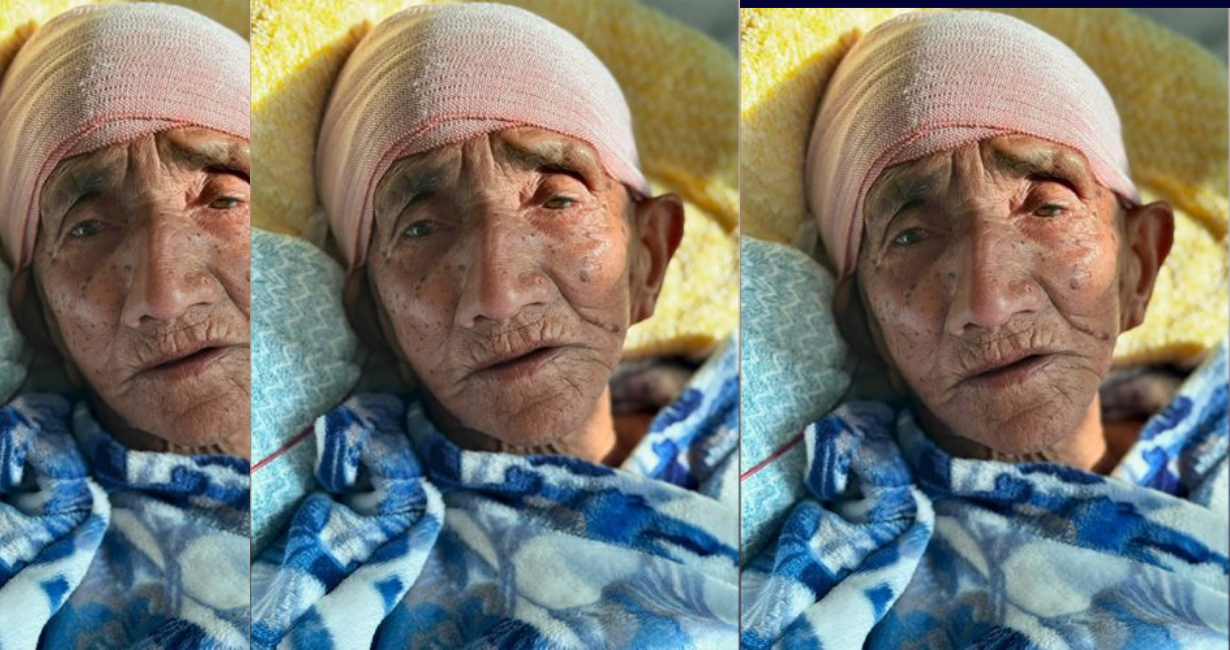
Kathmandu — Bir Hospital has successfully performed a major brain surgery on a 103-year-old woman from Koteshwor, Kathmandu, in what doctors describe as a rare neurosurgical achievement, even by international standards.
According to Dr Rajiv Jha, senior neurosurgeon and head of the Neurosurgery Department at Bir Hospital, the patient was suffering from a massive subdural hemorrhage, a serious form of brain bleeding that required immediate surgical intervention.
Family members said the elderly woman had been experiencing persistent headaches and frequent seizures for about a month. Initially, the symptoms were attributed to age-related weakness. However, after she remained unconscious for two consecutive days, she was taken to a nearby hospital and later referred to Bir Hospital for advanced treatment.
Hospital officials said the patient arrived at the emergency department in an unconscious state. Detailed medical examinations confirmed extensive bleeding in the brain, leaving surgery as the only viable option to save her life.
High-risk decision at extreme age
Dr Jha stated that performing brain surgery on a 103-year-old patient posed extreme medical and ethical challenges due to fragile brain tissue, weak overall health, and a high risk of post-operative complications. He added that the patient’s family had initially lost hope of survival.
Following extensive internal discussions, expert consultations, and detailed communication with the family, the Neurosurgery Department decided to proceed with the operation.
The surgery was carried out under the leadership of Dr Jha, with a team that included Dr Sameer Aryal, Dr Namrata Khadka, Dr Ayush Bimli, and nurse Sindhu Gautam, among others.
Condition improving after surgery
According to Dr Jha, the patient’s condition has improved significantly after the operation. She is now fully conscious, able to speak, and has started eating on her own. Preparations are underway to discharge her from the hospital on Thursday.
“It was an enormous challenge from both medical and ethical perspectives to perform brain surgery at such an advanced age,” Dr Jha said. “However, after careful evaluation and consultation with the family, we proceeded. The outcome has been encouraging.”
Rare case globally
Medical experts say successful brain surgery in patients over 100 years old is extremely rare worldwide. Only a limited number of such cases have been reported internationally, as complex neurosurgical procedures like treatment for subdural hematoma are usually avoided in centenarians due to the high risk involved.
Dr Jha said the successful outcome has boosted the morale of the hospital team and demonstrated the growing capability of Nepal’s medical sector.
“This achievement reflects the dedication, teamwork, and clinical capacity of Bir Hospital’s neurosurgery department and offers an opportunity to showcase Nepal’s medical expertise at the international level,” he said.