Kathmandu- Halfway through the current fiscal year 2082/83, Nepal’s development (capital) expenditure has dropped to just 12.12 percent, once again highlighting the government’s weak implementation capacity and shifting policy priorities.
According to data from the Office of the Comptroller and Auditor General, only Rs 49.42 billion has been spent on development works by mid-December. Compared to the annual target, this shows 12.12 percent spending, which is lower than last fiscal year’s 16.16 percent expenditure during the same period.
In the first half of fiscal year 2081/82, development spending had reached Rs 56.93 billion. This year’s further decline comes despite the absence of major natural disasters, raising concerns among policymakers and development stakeholders.
Officials and analysts attribute the slowdown partly to policy uncertainty. State priorities have shifted following the Gen-Z protests of 23–24 Bhadra. A senior official at the Ministry of Physical Infrastructure and Transport said that after the formation of the new government, the Ministry of Finance froze several development projects. This action created confusion across implementing agencies.
The official added that delays in approving new contracts and attempts to cancel or review multi-year projects further disrupted capital spending, even as ministries tried to correct past weaknesses.
Meanwhile, the Ministry of Finance has prioritised mandatory obligations, including salaries, social security allowances, elections, and reconstruction, leading to a sharp rise in current expenditure while development spending stagnated.
The government has set a capital expenditure target of Rs 478.8 billion for the current fiscal year. However, even after six months, development spending has not crossed Rs 50 billion.
Current expenditure nearing Rs 500 billion
In contrast, current expenditure has reached Rs 487.14 billion by mid-December, accounting for 41.25 percent of the annual target of Rs 1,180.98 billion. This includes salaries, social security payments, and grants to sub-national governments.
Expenditure under the financial management heading, which includes public enterprise investment and debt repayment, has reached Rs 153 billion, or 40.95 percent of the annual target.
Overall, the government has spent Rs 690.21 billion, or 35.14 percent of the total budget of Rs 1,964.11 billion, in the first six months of the fiscal year.
Rs 108 billion gap between income and expenditure
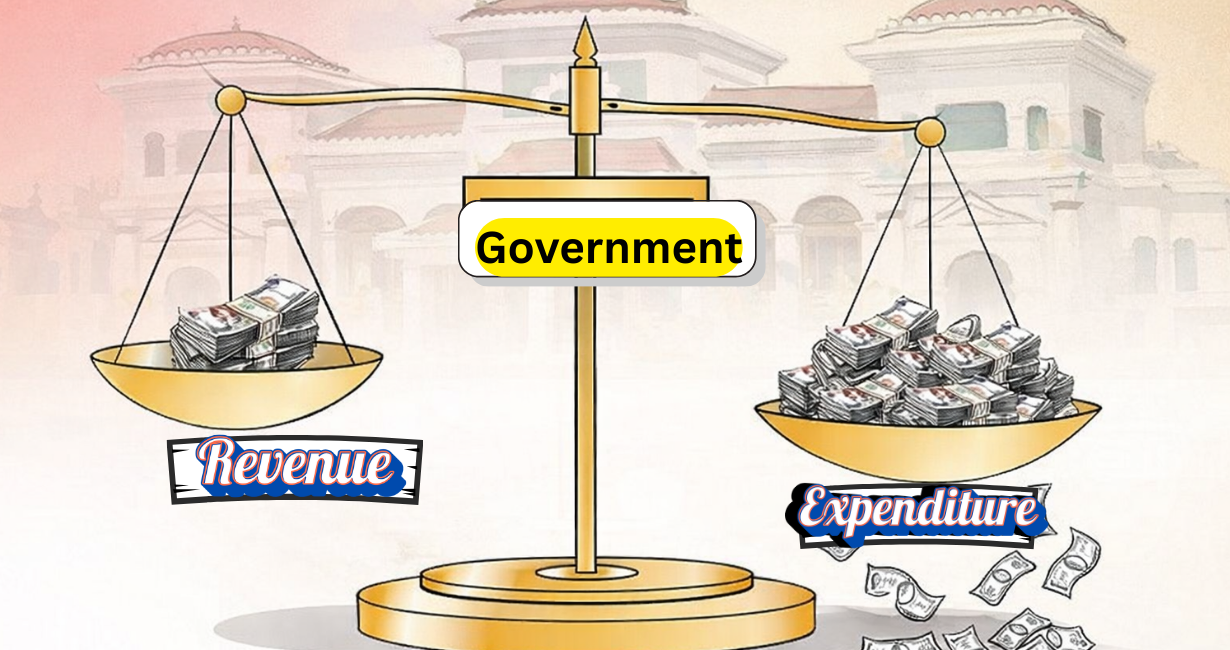
The first half of the fiscal year has also recorded a budget deficit of Rs 108 billion. While expenditure stood at Rs 690.21 billion, revenue collection reached only Rs 581.41 billion, according to the Ministry of Finance.
Foreign aid inflows have remained weak. Against a target of Rs 53.44 billion, the government has received only Rs 7.10 billion in foreign assistance so far, increasing reliance on public borrowing.
Revenue target under pressure
Revenue collection has reached 81.75 percent of the mid-year target, but only 39.28 percent of the annual goal of Rs 1,480 billion. Compared to the same period last fiscal year, revenue growth stands at just 2.47 percent.
The Ministry of Finance says lower income tax collection has significantly affected overall revenue. Income tax collection has declined by 2.66 percent year-on-year, reaching Rs 138 billion against a mid-year target of Rs 194 billion.
Customs revenue has grown by 8.08 percent, but remains below target, while VAT and excise duty collections have also failed to meet expected levels. Both the Customs Department and the Inland Revenue Department have underperformed against assigned targets, adding further pressure on fiscal management.