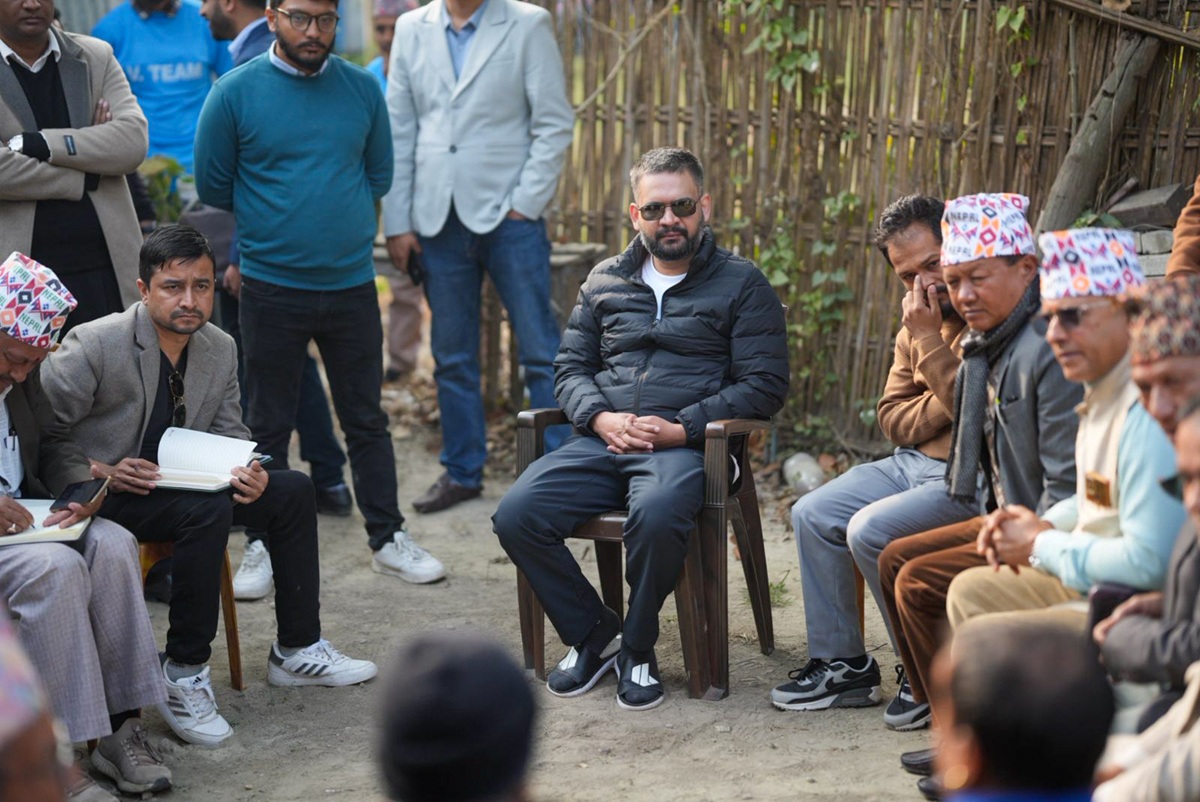
Jhapa — Senior leader of the Rastriya Swatantra Party (RSP) and outgoing Mayor of Kathmandu Metropolitan City, Balendra Shah (Balen), has issued a clarification regarding the use of dozers in squatter settlements in Kathmandu after questions were raised by locals during his visit to a squatter settlement in Jhapa.
Shah reached the squatter settlement of Kamal Rural Municipality in Jhapa Constituency No. 5 on Tuesday morning, where he held discussions with local residents. During the interaction, squatters questioned his past actions in Kathmandu, particularly the use of bulldozers along riverbank settlements, expressing fear that similar measures could be taken against them in the future.
Local residents said the images and narratives surrounding the use of dozers in Kathmandu had created panic among squatter communities and raised concerns that people living informally on public land might be forcibly displaced. They warned that such actions in the capital could set a precedent affecting settlements elsewhere, including Jhapa.

Responding to the concerns, Shah clarified that the actions taken in Kathmandu were aimed at protecting lives rather than evicting people. He said settlements along riverbanks in Kathmandu are extremely vulnerable to flooding during the monsoon and that the city administration focused on relocating residents to safer places instead of leaving them exposed to recurring disaster risks.
Shah said riverbanks are public land and that repeated flooding has endangered the lives of those living nearby. He argued that each monsoon season forces authorities to rescue residents from inundated settlements and move them temporarily. According to him, the objective was to prevent such risks permanently by managing settlements responsibly and safeguarding both public land and human lives.
He accused certain groups of deliberately spreading misleading narratives that portrayed the safety-driven interventions as forced evictions using dozers. Shah said this misinformation distorted the real intent of protecting vulnerable communities from natural disasters.

Shah also reminded residents that there is a legal process for resolving squatter issues. He said the Government of Nepal can distribute land through data collection by the Land Commission based on recommendations from local governments, and stressed that lawful and transparent mechanisms should be followed.
During the discussion, locals who have lived in the area for more than four decades complained that despite the formation of 23 land commissions over the years, genuine landless families have still not received land ownership certificates. He alleged that people with political access benefit while the real squatters are ignored. Shah agreed that land distribution based on access must end and said rightful landless citizens should receive ownership.
He informed that his party would make its manifesto and local agendas public in the first week of Falgun, adding that separate, issue-specific plans have been prepared for different regions, farmers, traders and the general public.
Health and education also emerged as key concerns during the interaction. One local who returned after two decades of foreign employment shared his frustration over the high cost of education and healthcare in Nepal, which he said forces young people to migrate abroad.
In response, Shah cited Kathmandu Metropolitan City’s policy of reserving 10 percent of seats in private schools for children from poor families. He said although the constitution guarantees free education, the lack of adequate budget remains a major obstacle. He stressed that access to education and health services should not depend on personal income.
Addressing criticism of the federal and provincial structure, Shah said corruption and mismanagement are far more damaging than administrative structures. He argued that the country’s economic problems are not caused by salaries of elected representatives but by corruption and misuse of resources outside formal systems.
Shah said the Rastriya Swatantra Party (RSP) will contest upcoming elections with a concrete plan focused on systemic reform, youth opportunities and long-term national transformation.