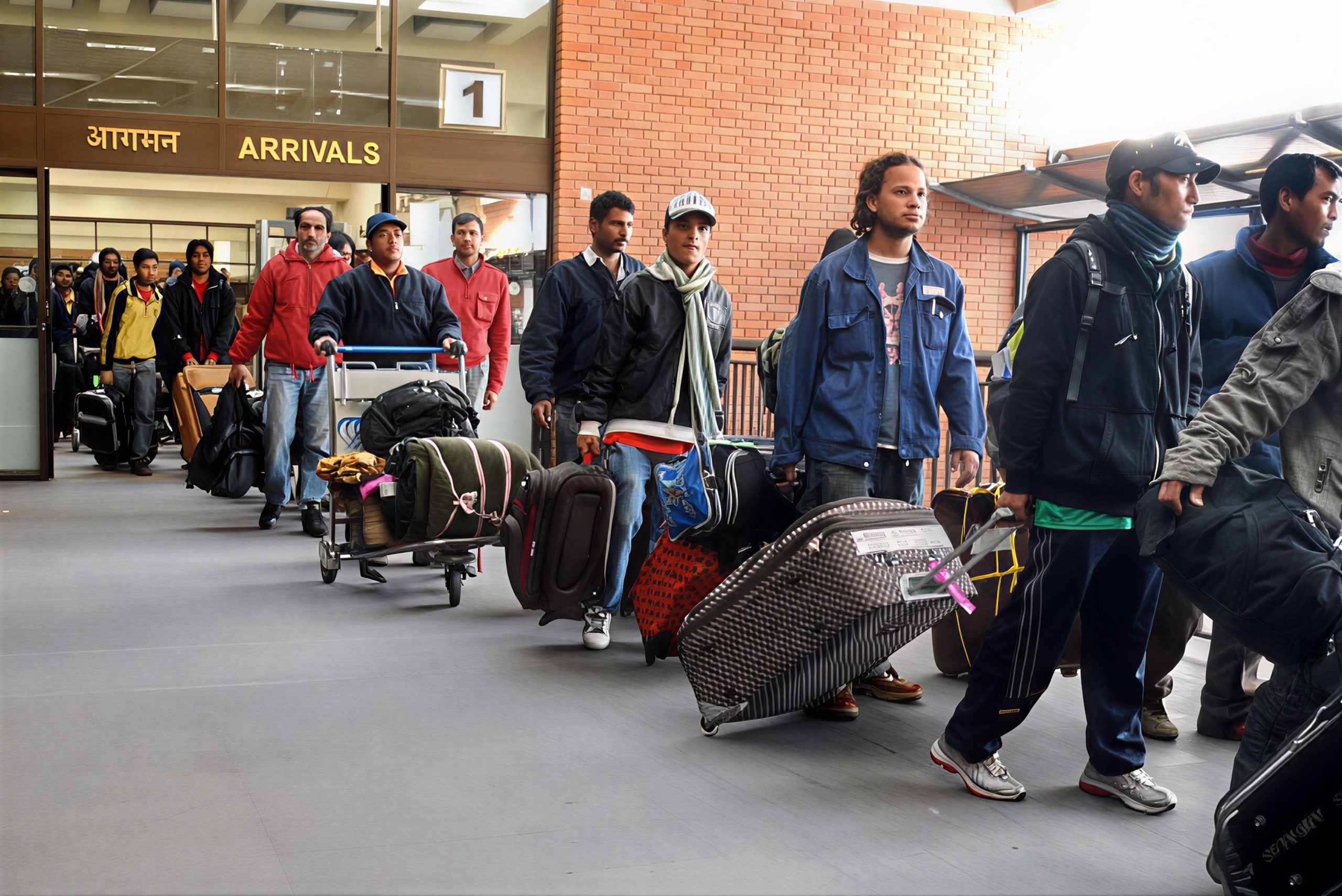
Kathmandu — Around 30,000 Nepalis who have been working in Iraq for years without official work permits are set to receive legal recognition from the Government of Nepal.
The decision was made by the Cabinet meeting held on December 10, according to Minister for Labour, Employment and Social Security Rajendra Singh Bhandari. The government has decided to bring Nepalis currently working in Iraq under formal registration and issue them work permits.
Cabinet approval after inter-ministerial consent
Minister Bhandari said the Ministry of Labour sought consent from the Ministry of Foreign Affairs and the Ministry of Law before submitting the proposal to the Cabinet. After receiving approval from both ministries, the Cabinet endorsed the decision.
“This decision will provide relief to thousands of Nepalis who have been working in Iraq for years but were not recorded in government data,” Minister Bhandari said.
Workers deprived of travel rights for years
For decades, Nepalis working in Iraq had no work permits and were excluded from Nepal’s official foreign employment records. As a result, many were unable to travel to Nepal, as they could not return to Iraq once they left.
Even Nepalis holding Iraqi residence cards faced restrictions due to the absence of Nepali work permits.
Under the new decision, Nepalis with valid Iraqi residence cards will be granted work permits if they apply after arriving in Nepal, the ministry said.
Iraq travel ban still in place
Nepal imposed a ban on sending workers to Iraq in 2061 BS (2004 AD) after 12 Nepalis were killed on 15 Bhadra 2061. The ban remains in effect to this day due to security concerns.
However, the government clarified that no new work permits will be issued for Nepalis going to Iraq. The current decision applies only to those already living and working there.
Illegal migration continues despite ban
Despite the ban, Nepalis have continued to travel to Iraq through illegal routes, mainly via India and Dubai. Authorities acknowledge that a significant number of workers entered Iraq using visit visas and informal channels.
In recent years, concerns have grown over human trafficking, particularly involving Nepali women.
Nepali women trafficked, sold as domestic workers
According to Foreign Employment Rescue Nepal, Nepali women are being trafficked to Iraq through brokers, often via Dubai, and sold as domestic workers.
Chairman Indralal Gole said women are sold to Iraqi households for USD 5,000 to 8,000, based on physical appearance.
“Women are traded based on their bodies and faces,” Gole said. “They face extreme labour exploitation and violence.”
Abuse, exploitation, and rescue operations
Domestic workers in Iraq are reportedly forced to work 15–16 hours a day. Some women have returned to Nepal after suffering sexual exploitation, while others have returned with children born during their captivity.
Gole said his organisation receives daily calls for rescue from women in distress in Iraq. The Department of Foreign Employment, with support from various organisations, has been conducting rescue operations.