Kathmandu-US President Donald Trump has claimed that American forces have carried out large-scale military strikes inside Venezuela and captured President Nicolás Maduro, marking what would be the most direct US intervention in the country in decades. Trump said Maduro and his wife, First Lady Cilia Flores, were flown out of Venezuela, though their current whereabouts remain unknown.
Read this:- US launches ‘large-scale strike’ on Venezuela, Trump claims President Maduro captured
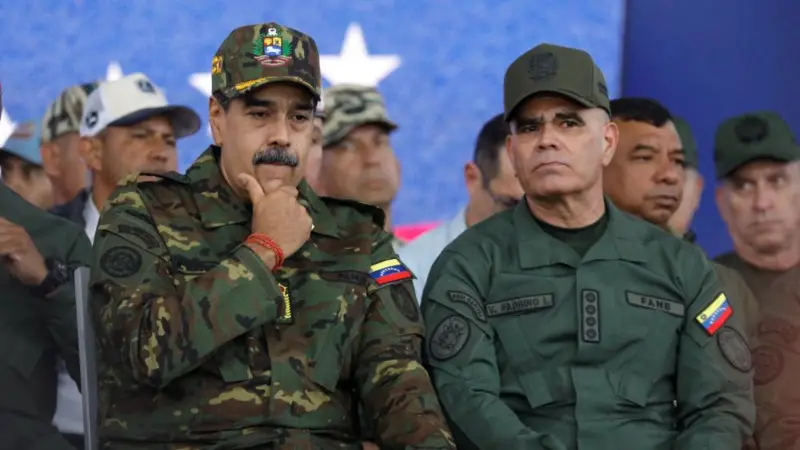
The claim has triggered global concern and regional uncertainty, with Venezuelan authorities acknowledging attacks but stopping short of confirming Maduro’s capture. Venezuela’s Defence Minister Vladimir Padrino López has said the armed forces remain operational and are defending the country’s sovereignty.
Has Maduro been deposed?
There is no independent confirmation that Maduro has been formally removed from office. Trump’s social media post states that the US has “successfully carried out a large-scale strike against Venezuela and its leader” and that Maduro and his wife are now in US custody.
Adding to the uncertainty, Venezuela’s Vice-President Delcy Rodríguez has said she does not know where Maduro is or whether he is still alive. However, both Rodríguez and Defence Minister Padrino remain in Venezuela and have appeared on state television, suggesting that significant elements of the Maduro government are still functioning.
What do we know about the US operation?
Details of the operation remain limited. Video footage from Caracas shows powerful explosions, smoke rising over parts of the capital, and helicopters flying in formation. Residents reported hearing aircraft and multiple blasts overnight.
The Venezuelan government has confirmed attacks in Caracas as well as in the states of Miranda, La Guaira, and Aragua, and said several military installations were hit.
US officials told CBS News that the strikes were ordered directly by the Trump administration and that Maduro was captured by the US military’s elite Delta Force unit. However, the Pentagon and the White House have yet to release official statements detailing the operation.
How did Nicolás Maduro come to power?
Maduro rose through the ranks of Venezuela’s left-wing political movement under former President Hugo Chávez and succeeded him after Chávez’s death in 2013. A former bus driver and trade unionist, Maduro consolidated power through the ruling United Socialist Party of Venezuela (PSUV).
Over more than two decades of PSUV rule, the party has gained control over major state institutions, including the judiciary, electoral council, and legislature.
In the 2024 presidential election, Maduro was declared the winner, despite opposition claims—backed by voting tallies—that their candidate Edmundo González had won decisively. González replaced opposition leader María Corina Machado after she was barred from running.
Machado was awarded the Nobel Peace Prize in October for her efforts to promote democratic transition. She later defied a travel ban to collect the prize and has said she plans to return to Venezuela, despite being declared a fugitive by authorities.
Why has Trump targeted Venezuela?
Trump has repeatedly blamed Maduro for the arrival of hundreds of thousands of Venezuelan migrants in the US, accusing him—without evidence—of deliberately sending criminals to American cities.
Nearly eight million Venezuelans are estimated to have fled economic collapse and political repression since 2013.
Trump has also made drug trafficking a central justification for action against Caracas. His administration has designated Venezuelan groups Tren de Aragua and Cartel de los Soles as Foreign Terrorist Organisations, alleging that the latter is led by Maduro himself—an accusation Maduro strongly denies.
Analysts note that Cartel de los Soles is not a unified cartel but a term used to describe corruption networks within the Venezuelan state.
Trump has doubled the reward for information leading to Maduro’s capture and announced plans to designate the Maduro government itself as a terrorist organisation.
Is Venezuela flooding the US with drugs?
Drug enforcement experts say Venezuela plays a limited role in global drug trafficking, primarily as a transit route. Most cocaine entering the US originates in Colombia and typically reaches American markets via the Pacific, not Venezuela.
US DEA data indicates that fentanyl—the drug responsible for most opioid overdose deaths in the US—is produced mainly in Mexico and trafficked across the US-Mexico land border. Venezuela is not listed as a fentanyl source in the DEA’s 2025 National Drug Threat Assessment.
How did tensions escalate to military action?
Pressure on Venezuela intensified after Trump began his second term last January. The US increased rewards for Maduro’s capture, launched naval operations against alleged drug-smuggling vessels, and imposed a total naval blockade on sanctioned oil tankers.
Since September, more than 30 US strikes on suspected drug trafficking vessels in the Caribbean and Pacific have reportedly killed over 110 people, drawing criticism from international legal experts.
In October, Trump confirmed he had authorised CIA covert operations inside Venezuela and warned of land-based strikes against what he called “narco-terrorists.”
How large is the US military presence in the region?
The US has deployed around 15,000 troops, aircraft carriers, destroyers, and amphibious assault ships to the Caribbean. Among them is the USS Gerald R. Ford, the world’s largest aircraft carrier.
The force has played a central role in enforcing the naval blockade and seizing oil tankers accused of transporting sanctioned Venezuelan crude.
What role does oil play in the conflict?
Venezuela holds the world’s largest proven oil reserves, and oil revenues fund more than half of its government budget. However, sanctions, mismanagement, and underinvestment have sharply reduced production.
In 2023, Venezuela produced just 0.8% of global crude oil, exporting about 900,000 barrels per day, with China as its largest buyer.
National emergency declared in Venezuela
Maduro has long accused Washington of attempting regime change to gain control of Venezuela’s oil resources—an allegation US officials deny.
What happens next?
With Maduro’s status unverified and key government figures still in Caracas, Venezuela’s political future remains deeply uncertain. The situation raises serious questions about international law, regional stability, and the precedent set by direct military intervention in Latin America.
As of now, many of Trump’s claims remain unconfirmed, and the full consequences of the US action are yet to emerge.