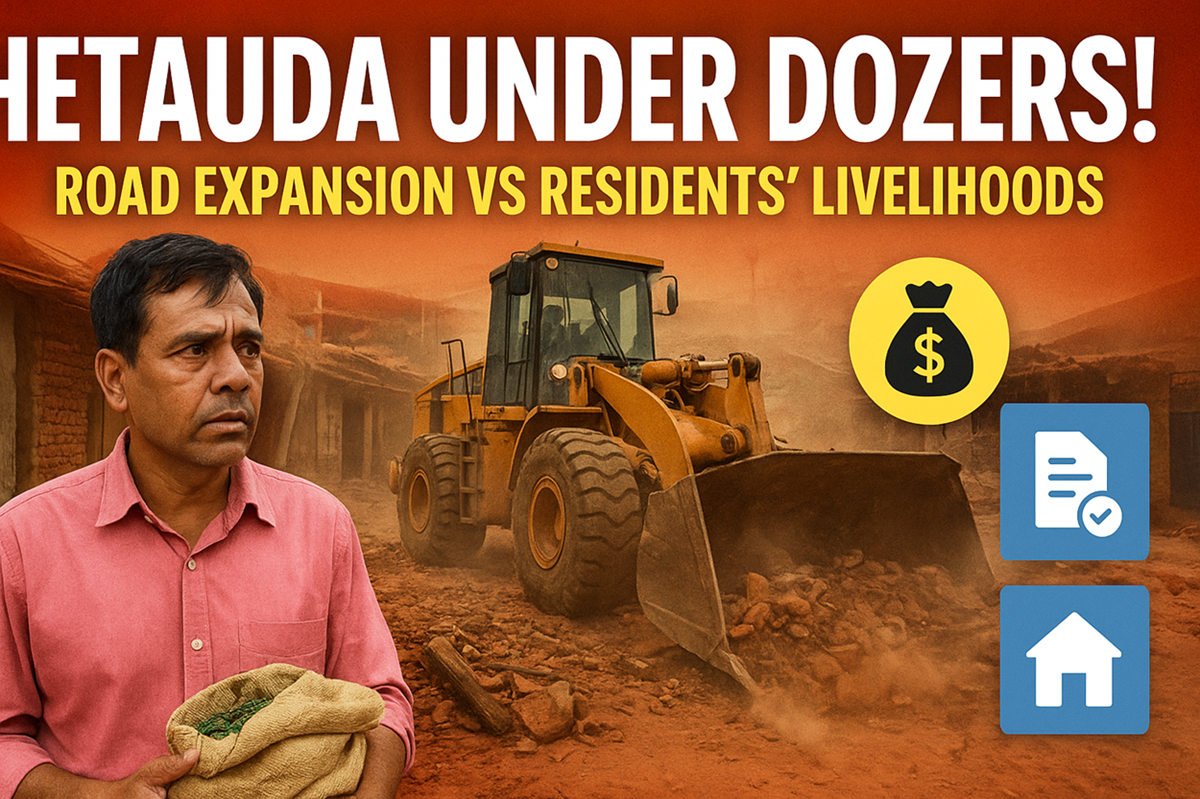
Hetauda’s recent road expansion, which has seen dozers moving through the market area, demolishing houses and businesses, underscores a persistent tension in Nepal’s urban development: the conflict between infrastructure growth and citizens’ livelihoods. While road widening and modernization are critical for improving connectivity, easing traffic, and promoting trade, the sudden disruption to residents and traders raises questions about planning, communication, and compensation mechanisms.
The Makawanpur administration’s decision to proceed with demolition despite interim orders from the Supreme Court highlights the challenges of governance in balancing legal frameworks with developmental priorities. Chief District Officer Basanta Adhikari’s stance—that work will continue as formal court notifications have not been received—reflects an administrative rigidity that risks alienating citizens already reeling from displacement. Moving ahead without inclusive dialogue can leave long-term scars on trust between local authorities and the community.
On the other hand, the Hetauda Sub-Metropolitan City’s 9-point support plan demonstrates an encouraging effort to mitigate hardship. Proposals for concessional loans, tax exemptions, facilitation of construction materials, and the creation of model housing reflecting Hetauda’s identity are constructive steps that recognize the human cost of development. Such initiatives should not remain mere promises but must be implemented swiftly and transparently, ensuring that affected households and businesses can rebuild and resume operations with minimal delay.
Urban development cannot succeed if it disregards the people it serves. The lesson from Hetauda is clear: infrastructure projects must be accompanied by robust social and economic support systems, proactive communication, and legal clarity. Only then can modernization efforts truly be inclusive, sustainable, and humane.
The challenge now is for authorities to act decisively—not just with dozers, but with fairness, foresight, and empathy. Hetauda’s citizens should not have to choose between their homes and the city’s progress. Development and dignity must go hand in hand.