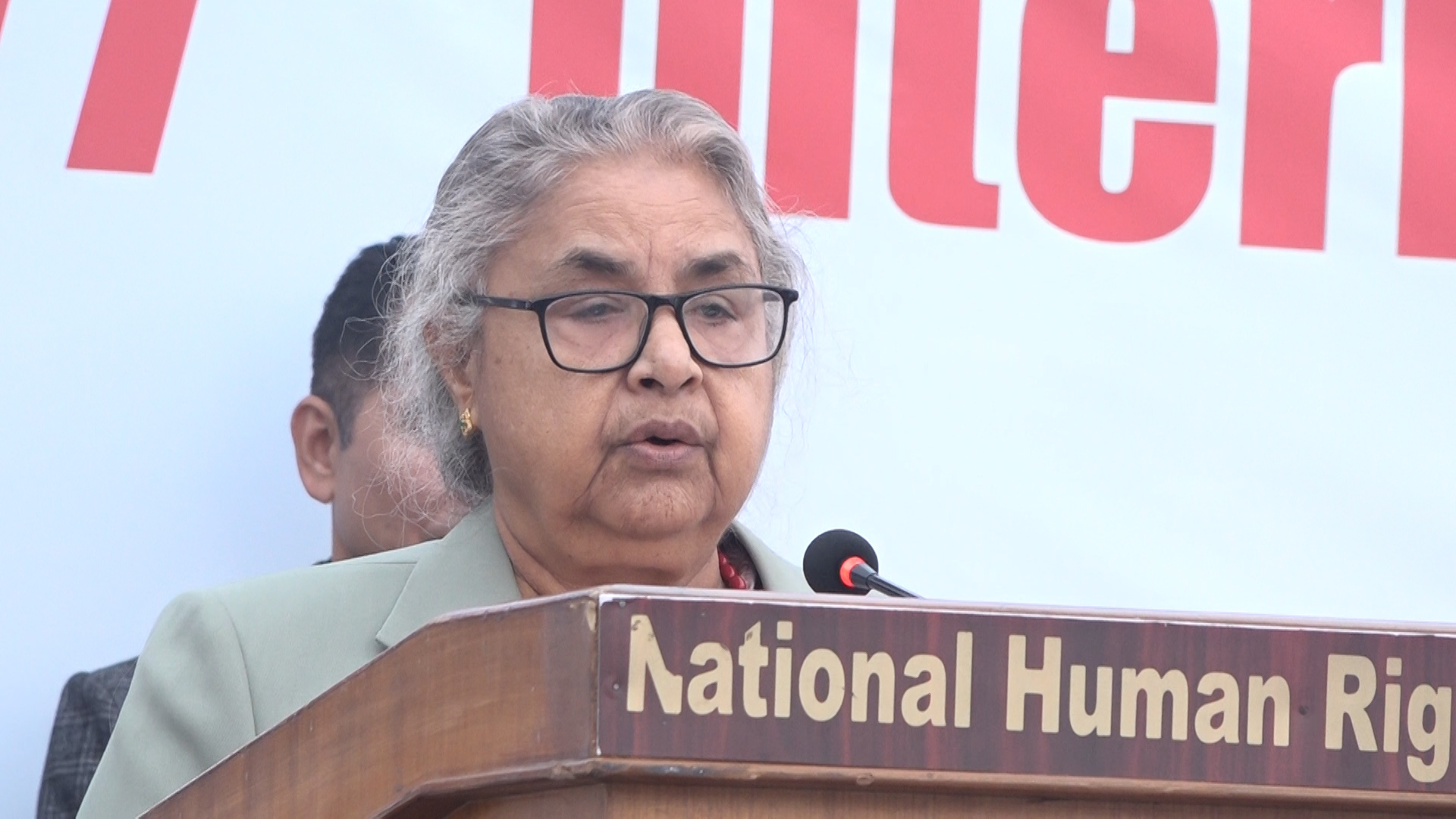
Kathmandu– Prime Minister Sushila Karki has called for broad cooperation from political parties, institutions, civil society, and citizens to ensure that the upcoming House of Representatives (HoR) election on March 5 is conducted within the scheduled timeframe.
In her message for the 77th International Human Rights Day, Prime Minister Karki emphasized that her government is prioritizing the formulation of laws to safeguard the rights and identities of human rights defenders, improving the safety and dignity of foreign employment, and preparing and implementing the sixth national human rights action plan.
Reaffirming her administration’s stance against corruption, she said that establishing good governance remains a central goal. “Human rights cannot be protected without transparency and accountability. The government is firmly moving forward on this path,” she noted.
Calling the election a foundational democratic exercise, the Prime Minister stated, “Free and fair election is the soul of democracy. It is the State’s fundamental duty to create an environment where citizens can choose their representatives without fear, greed, or pressure.” She added that the government aims to make the March 5 election more cost-effective, transparent, and technology-friendly.
The Prime Minister also expressed confidence that security personnel deployed during the polls will be provided with a conducive environment to perform their duties effectively.
Urging all political parties to participate responsibly, she appealed for respect and protection of voters’ rights to ensure a credible democratic process. “Nepal’s peace process has inspired the world, but transitional justice remains unresolved. Justice must reach conflict survivors for the process to be complete,” she said.
She expressed belief that concerned agencies will work toward a “credible conclusion” to the transitional justice process, centering victims and following existing laws and consensus.
Highlighting the government’s commitment to protecting the autonomy and effectiveness of the National Human Rights Commission (NHRC), PM Karki pledged to implement the Commission’s recommendations and strengthen infrastructure, manpower, and resources to retain its ‘A’ status.
The Prime Minister further noted that climate change has emerged as a growing challenge to human rights, stressing that Nepal—despite being a low emitter—is suffering severe impacts such as melting glaciers, erratic weather, floods, landslides, and rising temperatures, which affect health, education, food security, and livelihoods.
She said the government is intensifying national and international cooperation in climate adaptation, risk reduction, sustainable development, and climate justice.
Prime Minister Karki concluded by affirming Nepal’s commitment to the Sustainable Development Goals, pointing to progress in poverty reduction, gender equality, social justice, inclusivity, and peace. “Human rights are not merely legal arrangements; they must become part of our social conduct,” she said, adding that sustainable peace and prosperity can be achieved only when human rights evolve into everyday practice.