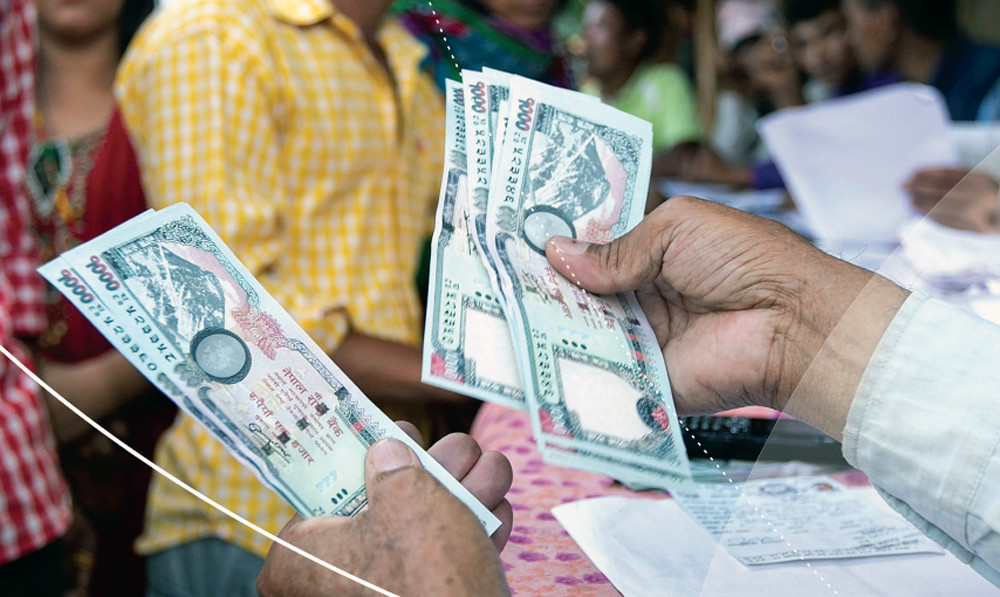
Kathmandu – Nepal will bar cash transactions above Rs 500,000 starting from Magh 1, as part of a major policy push to curb money laundering and increase financial transparency. The decision, taken by the Council of Ministers on November 16, follows imminent review pressure from the Financial Action Task Force (FATF), which placed Nepal on its grey list in February 2025 due to weak enforcement of anti-money laundering actions.
According to Hemraj Aryal, spokesperson for the Office of the Prime Minister and Council of Ministers, the new ceiling will be implemented after the Ministry of Finance publishes the decision in the Gazette. The move is an amendment under the existing Money Laundering Act. Nepal previously had a cash-transaction limit of Rs 1 million, which earlier stood at Rs 3 million.
Officials say the goal is to bring Nepal’s large informal economy into a transparent, trackable financial system. Although government transactions already go through banking channels, authorities admit that oversight of corruption, revenue evasion, illicit earnings and suspicious investments remains weak.
Finance Ministry spokesperson Tanka Prasad Pandey confirmed that Nepal Rastra Bank (NRB) will enforce the new rule by issuing directives to all banks and financial institutions. With digital payment infrastructure well established, the government expects implementation to be manageable.
How the New Rule Will Affect Citizens ?
Banking becomes mandatory for transactions above Rs 500,000
Purchase and sale of goods or services worth more than Rs 5 lakh must be conducted through banking channels—cheques, drafts, bank transfers, Connect IPS or online banking.
Cash withdrawal limit does not directly apply, but scrutiny increases
Though individuals may withdraw more than Rs 500,000, banks will require justification and proof of source.
High-value purchases under strict monitoring
Transactions involving land, vehicles, gold and silver, and large construction payments cannot be executed in cash.
Advantages for citizens
Banking transactions offer a verified audit trail, reducing fraud risks and helping resolve disputes.
Penalties for violation
The Department of Money Laundering Investigation may initiate inquiries, impose fines, and pursue legal action if transactions exceeding Rs 500,000 are made in cash.