Kathmandu — The probe commission formed to investigate the crackdown and subsequent violence during the Gen Z movement has completed the process of recording statements and has now moved toward drafting its final report.
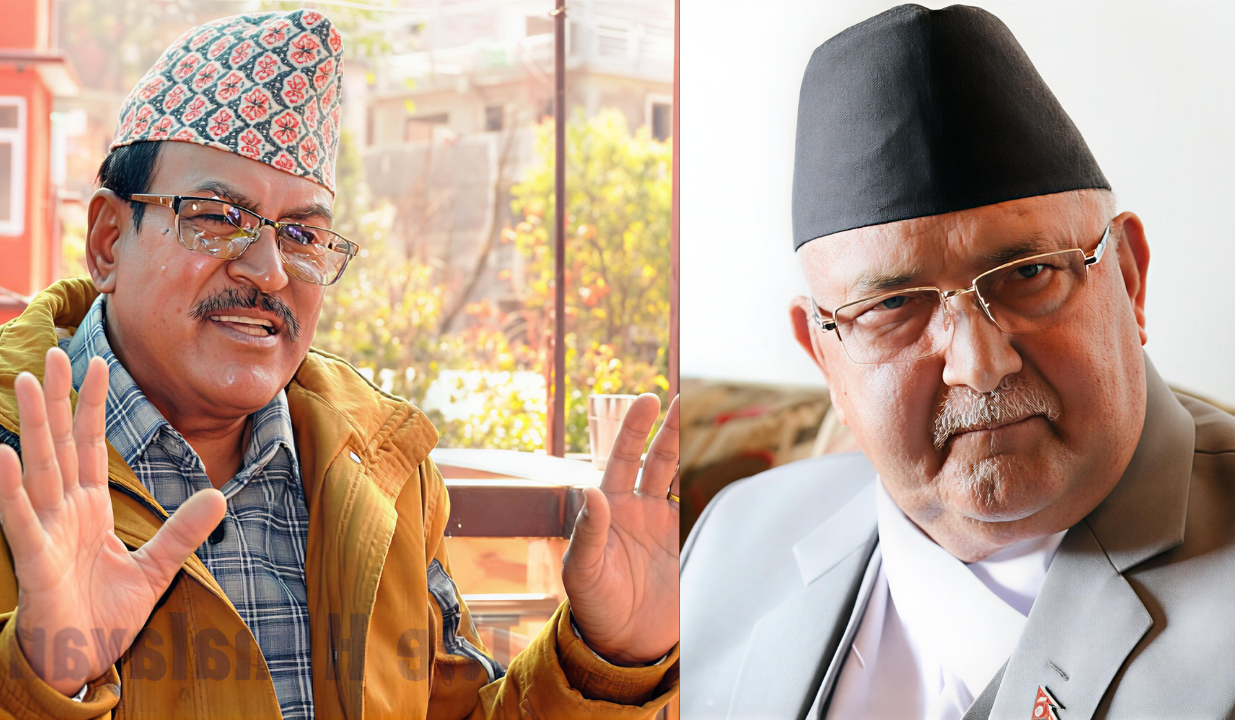
Former Prime Minister and CPN-UML Chair KP Sharma Oli has submitted a written statement to the commission regarding the events surrounding the Gen Z movement. A commission team had visited his residence in Baluwatar to formally request his statement, which Oli accepted and returned in written form through the same team.
Read this:- Oli Ready to Respond to Inquiry Commission, Will Not Appear in Person
Earlier, Oli had appeared in person at the National Human Rights Commission office in Pulchowk on Sunday, where he provided a statement lasting approximately two and a half hours. He elaborated on the incidents related to the Gen Z movement and clarified his role during that period.
Gen-Z Movement Probe: Inquiry Commission Prepares to Seek Statement from Former PM KP Sharma Oli
While Oli personally appeared before the Human Rights Commission, he chose to submit only a written response to the probe commission led by former justice Gauri Bahadur Karki. This is notable as Oli had earlier questioned the commission’s impartiality and publicly stated that he would neither appear before it nor submit any response.
Commission member and spokesperson Bigyan Raj Sharma said the commission has managed to collect statements from most individuals directly or indirectly associated with the movement. “Except for a few individuals, we have recorded statements from almost all concerned parties. We could not establish contact with some,” Sharma said, adding that the commission remains open to hearing anyone who still wishes to present their account.
Statements Nearly Complete
With the receipt of Oli’s written statement, the commission has largely completed its core investigative tasks. Last week, it also recorded the statement and written submission of Home Minister Ramesh Lekhak.
Earlier, the commission had collected extensive details related to the Gen Z movement, including statements from field-level security officials, followed by testimonies from then Kathmandu police chief, senior officials of the Valley Police Office, and high-ranking officers at police headquarters.
Ramesh Lekhak Submits Written Response to Inquiry Commission on Gen-Z Protests
Statements were also taken from officials of the Armed Police Force, the National Investigation Department, the Chief District Officer of Kathmandu, the then Home Secretary, and the Chief Secretary. Chief of the Army Staff Ashok Raj Sigdel also appeared before the commission along with senior army officials. Former Home Minister Rabi Lamichhane was among those questioned in the initial phase.
The commission has further recorded testimonies from injured protesters, families of those killed, movement leaders, and eyewitnesses. Information was also gathered from doctors involved in treating the injured, in coordination with hospital administrations.
In addition, the commission consulted weapons experts, former security officials experienced in crowd control, and governance experts after several statements pointed to corruption and systemic failure as root causes of the movement.
Ramesh Lekhak Appears Before Commission of Inquiry
The commission primarily focused on the incidents of Bhadra 23, involving alleged excessive use of force and casualties. For the violence, arson, and vandalism that occurred on Bhadra 24, the commission issued a public call for information to collect relevant data. Due to the refusal of then Inspector General of Police Chandra Kuber Khapung to provide certain records, the commission initially narrowed its investigation to the Bhadra 24 incidents.
Report Writing Underway
Following the completion of statements from stakeholders, the commission has begun preparing its final report. Although a preliminary framework had already been drafted, the commission will now fully concentrate on finalizing the document.
The report will detail findings related to excessive use of force and loss of life on Bhadra 23, as well as assess the damage caused by arson and vandalism the following day.
The three-member probe commission was formed on Ashoj 5, 2082 (2025) by the government established after the Gen Z movement, under the leadership of former justice Gauri Bahadur Karki.
After an agreement with Gen Z representatives, the government expanded the commission’s mandate last month. The revised terms require the commission to identify individuals involved in excessive force and extrajudicial killings and recommend criminal accountability.
Supreme Court Dismisses Writ Petition Against Commission of Inquiry Officials
The commission was also authorized to distinguish between criminally motivated organized violence and protest-related incidents, and to recommend withdrawal of cases filed solely for participation in the movement. However, Sharma clarified that the commission has formally informed the government that it cannot operate under the third mandate, as case withdrawal falls outside investigative norms.
“Beyond issues of excessive force and criminal accountability, we have already communicated to the government that we cannot enter other extended jurisdictions,” Sharma said.
Once the remaining statements from a few individuals are recorded, the commission will accelerate report writing. According to Sharma, the commission is expected to submit its final report to the government within the extended deadline.