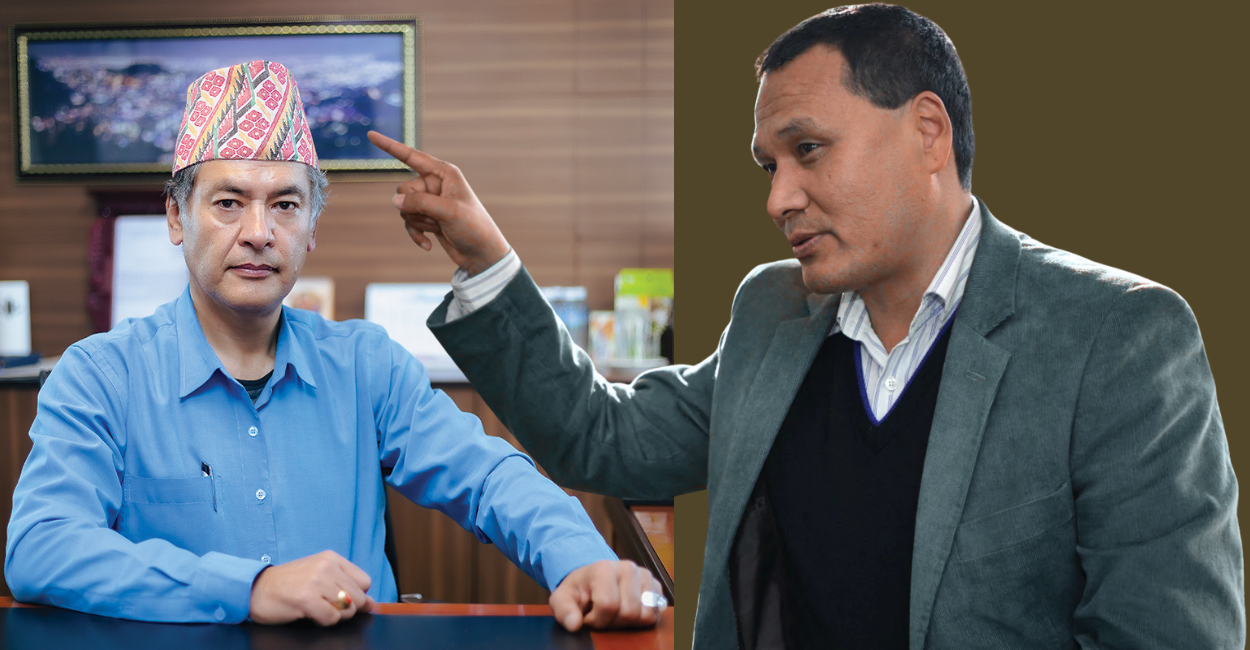
Kathmandu – The Supreme Court has overturned the Gen-Z government’s decision of 22 Asoj to remove Hitendradev Shakya from the post of Executive Director of the Nepal Electricity Authority (NEA). The court has issued a mandamus order in favour of Shakya, concluding that his removal—initiated by Minister for Energy, Water Resources and Irrigation Kulman Ghising—was made in a prejudicial and vindictive manner.
A joint bench of Justices Dr. Nahakul Subedi and Shrikant Poudel ruled that Shakya must be reinstated to the position for the remainder of his term. The verdict ends a years-long legal battle between Ghising and Shakya.
In its brief order, the bench stated that the proposal to remove Shakya “appeared to be biased and vindictive.” The court noted that the action taken on the basis of this proposal was neither fair nor reasonable and could not stand in the eyes of law. The court held that an NEA Executive Director can only be removed in accordance with the procedures outlined in the Nepal Electricity Authority Act, the Executive Director Service Regulation (2061), or the performance agreement. None of these procedures were followed.
Shakya had been replaced by Manoj Silwal after the Cabinet transferred him to the Water and Energy Commission as an “expert member” without his consent. The court clarified that such transfers require the official’s approval, a precedent the Supreme Court has reiterated in several past decisions. The verdict stated that although Shakya was not directly dismissed, the transfer effectively removed him from the role he was legally appointed to.
The ruling also notes that the conflict between Ghising and Shakya has appeared repeatedly in the Supreme Court through various writ petitions, indicating a long-standing personal and professional dispute. The court described Ghising’s latest decision as an act of retaliation, particularly since both had previously filed writs against each other and those matters remain pending.
Shakya expressed relief following the decision, saying he trusted the court to deliver justice. He said he would resume his responsibilities at NEA and continue working with the same commitment as before.
A Five-Year Rivalry Reignited
The confrontation between Ghising and Shakya dates back several years. Both long-time employees of the NEA, their rivalry intensified when leadership changes repeatedly shifted between them.
Ghising first became NEA Executive Director in 2073 BS. After his term ended in 2077, the government appointed Shakya—then the senior-most deputy executive director—as the new Executive Director. Ghising was dissatisfied and later returned to the post after a change in government in 2078 BS, with Shakya transferred to the Water and Energy Commission. Shakya challenged the decision in court, but the case lingered for years without resolution, and his term expired in the meantime.
In 2081, the Oli government again dismissed Ghising and reinstated Shakya. Ghising then filed a writ seeking reinstatement, but the Supreme Court did not issue an interim order in his favour, allowing Shakya to continue.
The Gen-Z movement brought another major shift: Ghising was appointed Minister for Energy, Water Resources and Irrigation. Soon after assuming the ministry, he removed Shakya once again and appointed Manoj Silwal, reviving the long-running dispute.
During the Gen-Z protests, Shakya’s home and car were torched by attackers, who targeted him because he had previously replaced Ghising at NEA. Despite this, Ghising removed Shakya shortly after being appointed minister, a move the Supreme Court has now labelled as arbitrary and retaliatory.
The ruling also comes at a time when Ghising faces criticism over a non-transparent power purchase agreement with India’s PTC India Ltd., worth Rs 430 million, which has raised questions about oversight and decision-making.
With the Supreme Court now reinstating Shakya and invalidating the minister’s decision, the political and administrative implications for the Gen-Z government—and for Minister Ghising himself—are significant. How Ghising responds to the court’s strong language against his actions remains to be seen.