


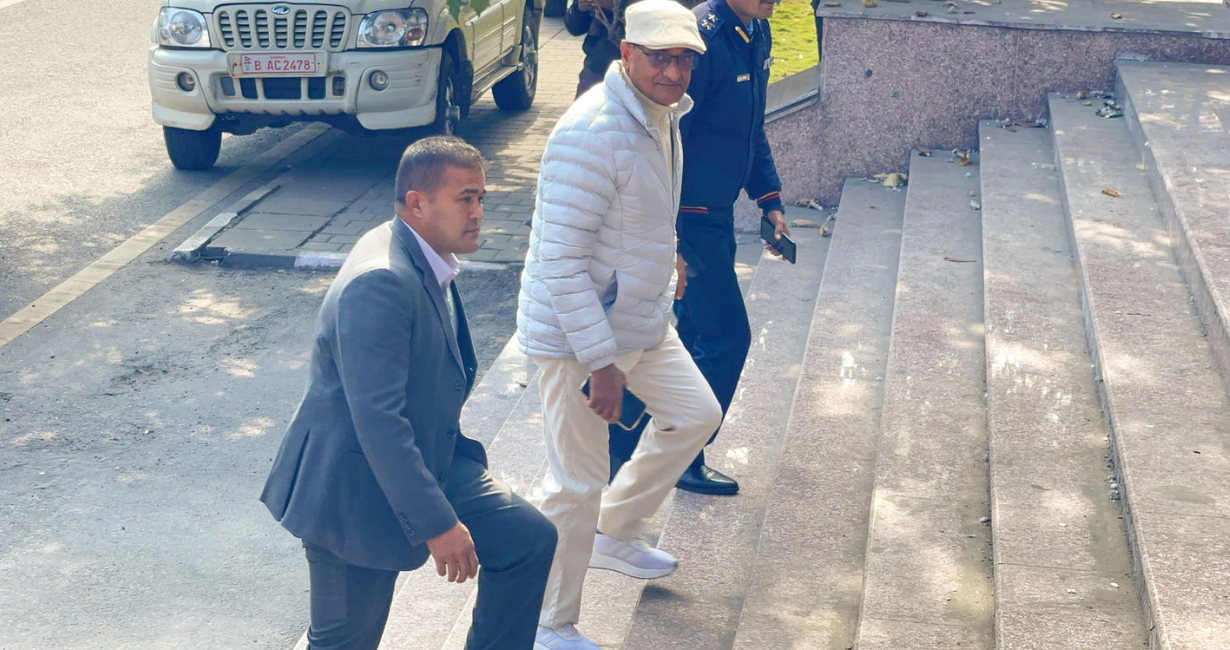
Kathmandu— Nepali Congress leader and former Home Minister Ramesh Lekhak has submitted a written response and recorded a statement before the High-Level Commission of Inquiry investigating the Gen-Z Movement incidents of Bhadra 23 and 24.
Lekhak spent nearly two and a half hours on Monday responding to questions from commission officials, detailing decisions taken during his tenure as home minister at the time of the protests.
In his statement, Lekhak said a Central Security Committee meeting was held a day before the protests, during which he instructed security agencies to exercise maximum restraint. According to him, his directives focused on preventing loss of life, ensuring coordinated peace and security management, and remaining cautious about possible infiltration, as the protest was not led by any political organization.
Lekhak also submitted a written clarification to the commission, a copy of which has been made public.
In the document, he expressed serious dissatisfaction over restrictions imposed on him, including confinement within the Kathmandu Valley and the confiscation of his passport. He said he learned about these measures through media reports and claimed he was neither formally informed nor given an opportunity to be heard.
Lekhak questioned the legal basis for the decisions, stating that such actions without notice or justification were contrary to constitutional principles, the rule of law, and norms of fair hearing. He urged the commission and the government to clarify the grounds and duration of the restrictions.
Addressing personal losses, Lekhak told the commission that two houses in Mahendranagar and one in Kathmandu were burned during the protests, along with thousands of books and documents related to Nepal’s peace process and constitutional negotiations. He also stated that his critically ill mother died a few days after being taken to hospital without oxygen during efforts to protect her from protesters.
Despite the losses, Lekhak said he considered his personal suffering secondary to the damage inflicted on the country and called on the commission to conduct a fair, impartial, and unbiased investigation to establish facts and guide future generations.
The commission, led by former judge Gauri Bahadur Karki, is investigating loss of life and property during the Genji Movement following a government decision to form a high-level inquiry body.

1 comment
[…] Ramesh Lekhak Submits Written Response to Inquiry Commission on Gen-Z Protests […]