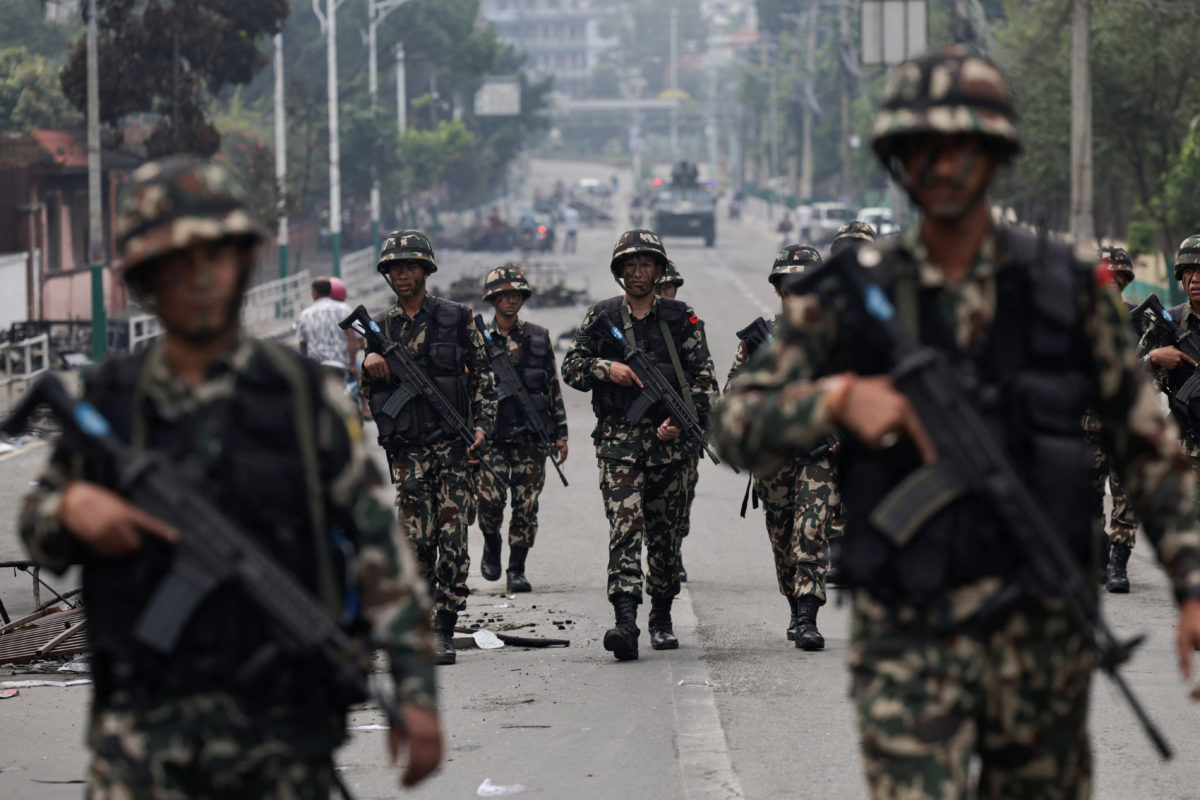
Kathmandu: The Nepal Army is set to mobilize around 80,000 personnel for the House of Representatives elections scheduled for march 5, as part of an integrated election security plan. The deployment will cover nearly 95 percent of the Army’s total approved strength of 96,000, following the finalization of polling stations by the Election Commission.
Nepal Army spokesperson Brigadier General Rajaram Basnet said the Army has already begun preparatory work, including setting up constituency-level bases, conducting trainings, and coordinating with other security agencies. He stated that although the Army will be formally deployed in the field one month prior to the elections, pre-election preparations are already underway nationwide.
Read this:- President Approves Mobilization of Nepal Army for Upcoming Elections
“Election-focused training, joint exercises with other security agencies, and district-level coordination are ongoing,” Basnet said. “The Army will be deployed in the field one month in advance in line with the integrated security plan.”
During the election period, the Nepal Army will assume full responsibility for security at all airports across the country, as well as at prisons. At present, these facilities are guarded by Nepal Police and the Armed Police Force. The Army will also coordinate the deployment and management of personnel from both police forces during the elections.
Similarly, security personnel currently deployed at government institutions and other sensitive locations will be redirected toward election duties, with the Nepal Army taking over responsibility for those sites one month ahead of polling day.
The President has already approved the mobilization of the Nepal Army for the elections, granting clearance three months in advance. Following this approval, the Army has intensified its logistical and operational preparations.
Read this:- Falgun 21 Elections to Cost Rs 27 Billion, Security Alone Demands Over Rs 20 Billion
Election-focused security seminars have been completed in five provinces, with Madhes and Bagmati provinces yet to hold similar seminars. These meetings involve the Nepal Army, Chief District Officers, and district-level heads of all security agencies, aimed at coordinating roles and responsibilities.
Under the integrated security plan, the Nepal Army will continue its traditional role as the “third security ring” during elections. Basnet emphasized that while the Army’s core role remains unchanged, ensuring security according to the ground situation is a shared responsibility of all security agencies.
The Army will establish operational bases one month before the elections and begin providing election-focused security from those bases. Districts have already assessed their manpower requirements and submitted plans through battalions to the brigade level. Any shortage of personnel in a district will be managed through inter-district coordination, with brigades reallocating forces as needed.
Read this:-Nepal Army reiterates commitment to Constitution
Meanwhile, the Election Commission has started printing voter lists, and political parties have submitted closed lists of proportional representation candidates, which are currently under verification. In the proportional representation system, 64 political parties are set to participate using 58 election symbols.