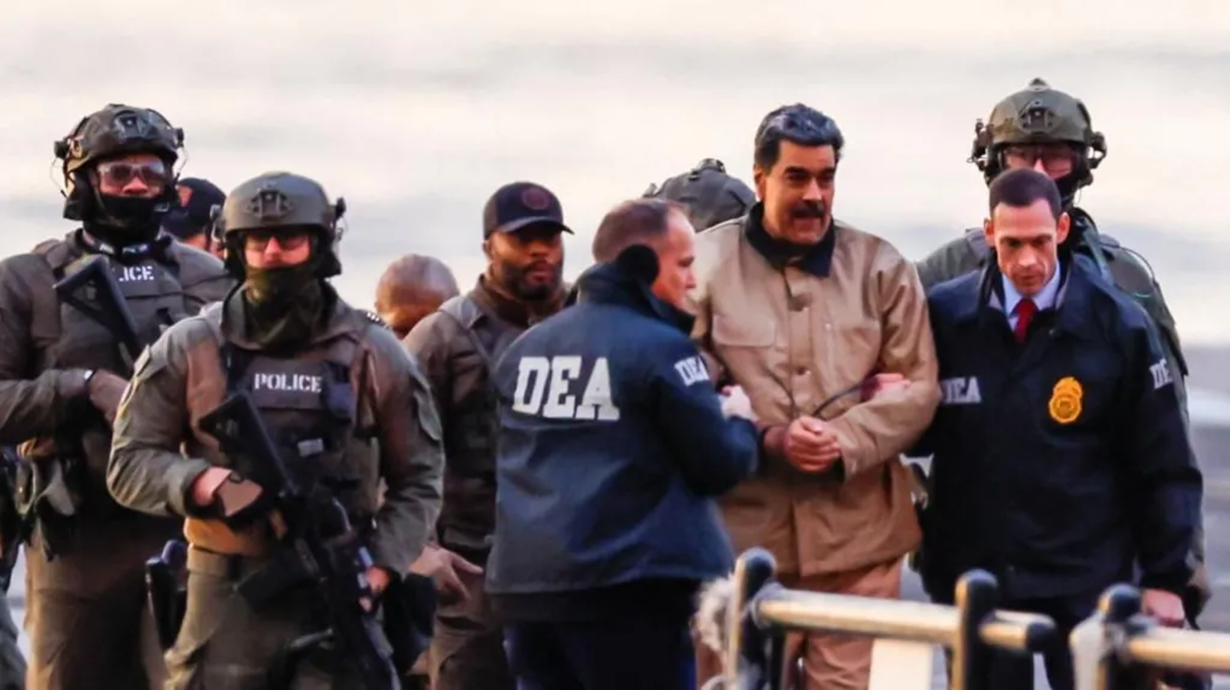
New York: Ousted Venezuelan leader Nicolás Maduro made a defiant and dramatic appearance in a New York federal courtroom, declaring himself a “kidnapped” president and a “prisoner of war” as legal proceedings formally began against him in the United States.
The sound of clanking leg shackles echoed through the courtroom moments before Maduro was escorted inside by U.S. marshals. Addressing the packed court through a Spanish interpreter, the 63-year-old told Judge Alvin Hellerstein that he was still the president of Venezuela and had been forcibly taken from his home in Caracas during a U.S. military operation on January 3.
Judge Hellerstein quickly curtailed Maduro’s remarks, stating that there would be an appropriate time and place to address such claims, and instructed him to confirm his identity so the arraignment could proceed.
During the 40-minute hearing on Monday, Maduro and his wife, Cilia Flores, both pleaded not guilty to a range of serious charges, including drug trafficking, weapons possession and conspiracy. Maduro described himself as innocent and law-abiding, while Flores also asserted her complete innocence.
The couple, arrested over the weekend during a surprise U.S. operation that included strikes on Venezuelan military facilities, appeared in blue and orange jail shirts with khaki trousers. Both wore headphones to follow the Spanish translation of the proceedings. Maduro was seen carefully taking notes on a yellow legal pad, later requesting permission from the judge to retain it.

Despite the gravity of the moment, Maduro appeared composed, even greeting members of the audience as he entered the courtroom. His calm demeanour briefly broke at the end of the hearing when a man from the public gallery shouted that Maduro would “pay” for his crimes. Maduro responded in Spanish by shouting that he was a president and a prisoner of war, after which the man was escorted out in tears.
The proceedings carried emotional weight for others present as well. Venezuelan journalist Maibort Petit told reporters that U.S. missile strikes during Maduro’s arrest had damaged her family home near Fuerte Tiuna in Caracas, describing the courtroom scene as surreal.
Flores remained largely silent throughout the hearing. Visible bandages near her eyes and forehead were attributed by her lawyers to injuries sustained during the arrest. Her legal team requested immediate medical evaluation, including imaging for possible rib injuries and fractures.
Neither Maduro nor Flores sought bail during the hearing, meaning they will remain in federal custody. The court scheduled the next hearing for March 17.
U.S. prosecutors have accused Maduro of leading a narco-terrorism conspiracy involving large-scale cocaine trafficking, as well as charges related to machine guns and destructive devices. The indictment also names his wife and their son, Nicolás Ernesto Maduro Guerra, who remains in Venezuela. Several senior Venezuelan figures, including current and former interior ministers and an alleged gang leader, have also been charged, with U.S. authorities offering rewards for information leading to some arrests.
Maduro’s courtroom appearance marks a historic and unprecedented moment, underscoring the deepening international and legal crisis surrounding Venezuela’s political future.